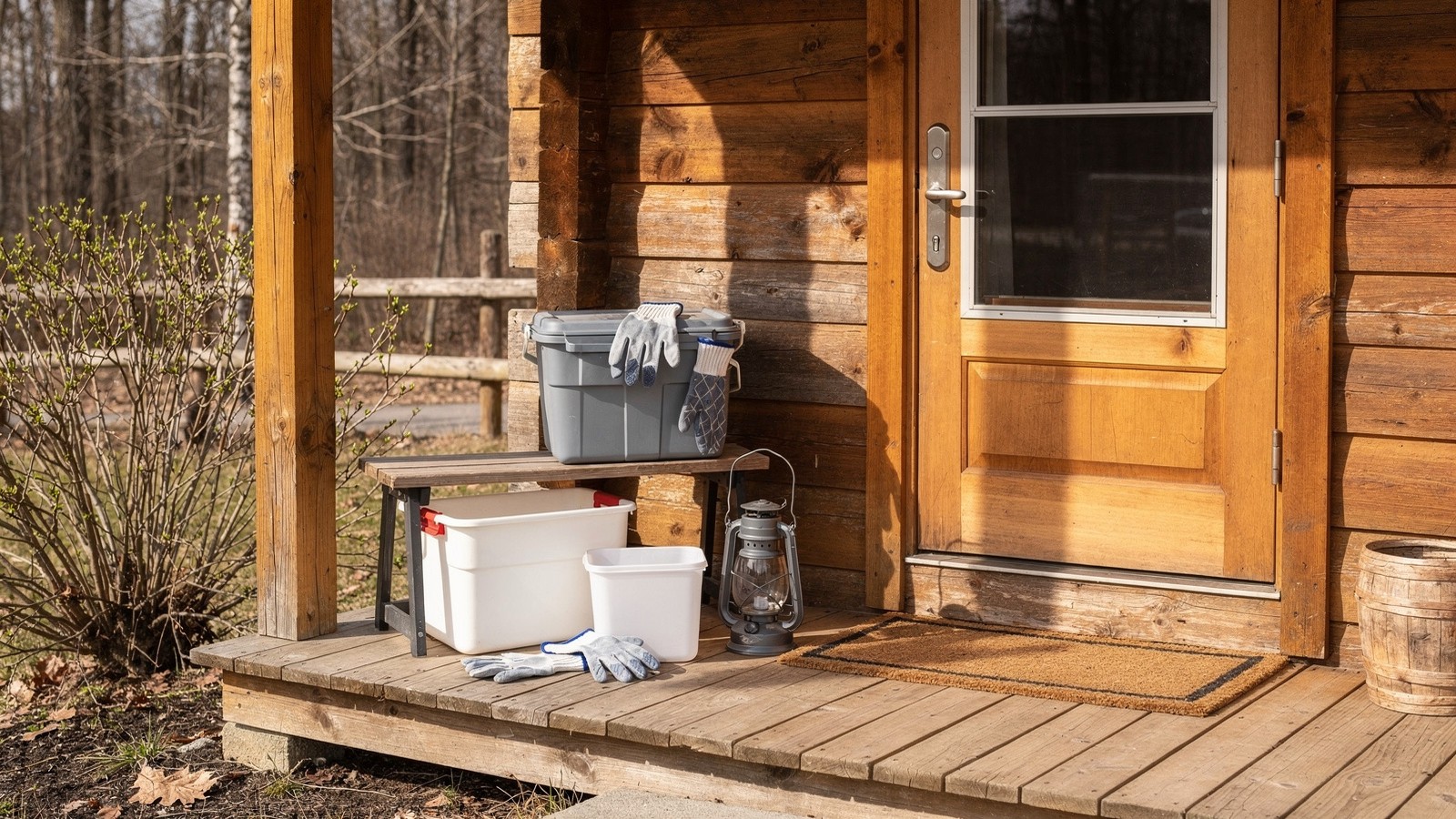

Spring openings are where “we’ve always done it this way” turns into 30 texts, two emergency hardware store runs, and a guest who arrives before the hot water does.
Most groups don’t struggle because they lack a checklist. They struggle because nobody owns it—and the work stays invisible until something breaks. That’s when a missed handoff turns into an argument.
This is the spring opening structure we use as operators: a short workflow, clear task owners, and proof of completion. It’s built around what actually fails in spring—water, HVAC, docks, linens, vendors, and guest expectations.
The operator reality: spring problems are coordination problems
Spring isn’t a normal turnover. You’re waking up a property that’s been dormant, while vendors are slammed and weather is unpredictable.
The goal isn’t “do everything.” It’s to do the right things in the right order:
1) Make the property safe and functional (access, alarms, water, heat/cooling) 2) Make the guest experience consistent (cleanliness, linens, amenities staged) 3) Make responsibility visible (who did what, when, and what’s still open)
If you only change one thing this year: stop treating spring opening as a long to-do list. Treat it as a short operational workflow with owners and evidence.
The spring opening workflow (use this order)
This sequence cuts rework and prevents “we cleaned before the water was on” mistakes.
1) Access + safety baseline 2) Water system de-winterize + verification 3) HVAC startup + filter + thermostat checks 4) Dock + exterior readiness (when conditions allow) 5) Deep clean + linens/soft goods staging 6) Final walkthrough + photo sign-off 7) Guest messaging + expectation setting
Next: the checklist by section.
1) Access + safety baseline (before anything else)
Spring opening starts with: can someone safely enter and work? This is where you prevent injuries, insurance claims, and day-one panic.
Checklist:
- Confirm entry access: keys/codes updated, lockbox working, smart lock batteries replaced
- Walk the main paths: remove fallen branches, check for ice/mud hazards, confirm exterior lighting
- Check smoke/CO detectors: test, replace batteries, confirm placement hasn’t been altered
- Verify fire extinguisher: present, charged, accessible
- Confirm emergency shutoffs are known and reachable: water main, electrical panel, propane shutoff
- Quick pest check: droppings, nests, chewed items; set traps or schedule service if needed
Operator note: If you manage with co-owners, this is where tension starts: one person assumes another “handled safety.” Don’t assume. Assign it.
Proof to collect: photos of tested alarms, panel/shutoffs, and any hazards addressed.
2) Water system de-winterize + verify (highest-risk task)
If you do nothing else well, do water well. Water issues cause the most guest-impacting failures.
Checklist:
- Confirm winterization status: what was drained, what was bypassed, what was shut off
- Turn water on slowly and monitor pressure
- Inspect for leaks at common failure points:
- Under sinks and behind toilets
- Water heater connections
- Utility room manifolds
- Hose bibs / exterior spigots
- Crawlspace/basement visible lines
- Flush lines:
- Run cold then hot at each faucet until clear
- Flush toilets multiple times
- Run showers long enough to clear air and sediment
- Water heater:
- Verify power/gas on
- Confirm temperature set appropriately
- Check relief valve area for leaks
- Confirm hot water recovery time (don’t assume)
- Well system (if applicable):
- Check pressure tank gauge behavior
- Listen for short cycling
- Inspect well cap area and any visible piping
- Septic considerations:
- Confirm no alarms, no backing up, no slow drains across multiple fixtures
- Water quality:
- If you’re on well water, do a basic test (at minimum) and keep a record
- If you use a filtration system, replace filters on schedule
Operator note: The win isn’t “we turned it on.” The win is “we turned it on, then stayed long enough to confirm it stayed on without leaking.” Build dwell time into the plan.
Proof to collect: photo of water heater settings, pressure gauge (if well), and any leak repairs.
3) HVAC startup + settings (don’t skip the sign-off)
Guests don’t care that it’s “shoulder season.” They care that the cabin is comfortable at 10pm when the temperature drops.
Checklist:
- Replace or clean filters (bring spares; don’t rely on what’s on-site)
- Thermostat:
- Confirm it powers on and is connected (if smart)
- Verify correct mode switching (heat/cool)
- Confirm schedules aren’t stuck on winter setbacks
- Run a full cycle:
- Heat: confirm warm air output and stable operation
- Cool (if seasonally appropriate): confirm compressor engages and airflow is cold
- Inspect vents/returns: clear obstructions, vacuum visible dust buildup
- Check supplemental heat sources:
- Baseboards, space heaters (if provided), gas fireplace, wood stove
- Confirm safety clearances and operating instructions are present
- Schedule preventive maintenance early (HVAC tech calendars fill fast)
Operator note: The most common HVAC “failure” is communication. Put the final thermostat settings in the checklist and treat it like a sign-off item.
Proof to collect: photo of thermostat showing mode and setpoint; photo of filter replacement.
4) Dock + waterfront readiness (inspect before you install)
Dock issues are high-liability and high-expectation. If the dock isn’t ready, you need to know early so you can message it clearly.
Checklist:
- Structural inspection:
- Check sections for cracks, warping, rot, or loose flotation
- Confirm hardware is intact (bolts, brackets, pins)
- Inspect ladders and handrails for stability
- Safety features:
- Non-slip surfaces in good condition
- No exposed nails/screws
- Cleats secure and usable
- Seasonal setup:
- Install/position only when conditions are safe and permitted
- Confirm water depth and bottom conditions haven’t shifted
- Verify bumpers/fenders and tie-offs
- Shoreline access:
- Steps/paths stable
- Remove trip hazards
- Water toys/amenities (if you provide them):
- Inventory and condition check (life jackets, paddles, pumps)
- Clear rules posted (age/fit requirements, return expectations)
Operator note: Don’t let “dock TBD” live in a chat thread. Make it a visible status: Not Installed / Installed / Installed + Inspected.
Proof to collect: wide photo of dock installed, close-ups of ladder/cleats, and any hazard fixes.
5) Linens + soft goods (set the standard, then stage it)
Linens are where “it’s fine” becomes a review. Spring is when you find what got stained, mildewed, or lost last season.
Checklist:
- Inventory by bed and bath:
- Sheets (correct sizes), pillowcases, duvet covers/quilts
- Towels (bath, hand, washcloth), bath mats
- Kitchen linens (dish towels, oven mitts)
- Condition standards:
- Remove anything with stains, thinning fabric, or persistent odor
- Check for mildew (especially if stored on-site)
- Laundry plan:
- Decide: on-site wash vs. off-site service
- Confirm turnaround time before first guest
- Staging:
- Make each bed “grab-and-go” for cleaners (labeled sets help)
- Stage backups in a single known location
- Presentation:
- Consistent folding and bed-making standard
- Extra blankets accessible and clean
Operator note: The issue usually isn’t the laundry. It’s that nobody owns the linen standard.
Proof to collect: photo of linen closet staging and one made bed per bedroom.
6) Vendors + scheduling (the spring multiplier)
Spring openings fall apart when vendors are scheduled “sometime that week” and nobody owns the timeline. You want a simple sequence with confirmed dates.
Vendors to line up early:
- Cleaner/deep clean team
- Handyman/maintenance
- Dock service (if applicable)
- HVAC tech
- Laundry service (if used)
- Pest control
- Trash service restart (if seasonal)
Coordination checklist:
- Confirm scope in writing (what “spring open” includes)
- Confirm dates and access method (codes, lockboxes)
- Assign a single point of contact (one operator, not a group chat swarm)
- Require completion evidence:
- Photos of completed work
- Notes on issues found and parts needed
- Build buffer time before first guest (24–48 hours if possible)
Operator note: The best vendor coordination tool isn’t more reminders. It’s one visible place where responsibility is clear.
7) Guest messaging (remove surprise before it becomes a complaint)
Spring guests ask the same questions because spring conditions are variable. If you don’t answer proactively, you’ll answer reactively—usually while you’re also coordinating repairs.
Send a pre-arrival message that covers:
- Road/driveway conditions (mud season, snow melt, steep grades)
- Dock/waterfront status (installed or not, water temperature, safety reminders)
- Water system notes (well water taste/odor expectations if relevant, filtration info)
- HVAC guidance (thermostat basics, what to do if they’re cold/hot)
- What to bring (layers, slippers, bug spray, flashlight, etc.)
- Clear “if something is wrong” instructions:
- One contact method
- Expected response window
- What counts as urgent
Template (edit to fit your property):
“Quick spring note before you arrive: the cabin is fully opened for the season, and we’ve tested water + heat. Spring conditions can change fast—expect cooler nights and some muddy spots near the driveway.
Dock status: [Installed + ready] / [Not installed yet due to conditions—water access is still available at ___].
If anything feels off (no hot water, heat not responding, etc.), message us here with a photo if you can. We’ll respond as quickly as possible and coordinate service.”
Operator note: This isn’t about lowering standards. It’s about removing surprise.
Make this checklist runnable: owners, sign-offs, one source of truth
A spring checklist only works if it can be executed by real people on real weekends.
Minimum structure that prevents the first-week chaos:
- Assign an owner to every line item (not “someone,” not “we”)
- Use simple statuses: Not Started / In Progress / Blocked / Done
- Require proof for critical systems: water on + no leaks, HVAC cycle, dock inspection, safety devices tested
- Capture decisions: thermostat settings, linen standards, dock readiness status
This is the part that protects relationships. When the work is visible, you don’t have to litigate who did what.
Closing: a calm spring opening is built, not hoped for
Spring turnover chaos is rarely one big failure. It’s five small misses that stack up: a slow leak nobody waited to see, a thermostat schedule nobody reset, a dock status nobody confirmed, linens nobody inventoried, and vendors nobody pinned to a timeline.
Run spring opening like an operator: one repeatable workflow, clear owners, and proof of completion. Prioritize water, HVAC, safety, and dock readiness first—then clean and stage once the house is truly awake.
Do that, and your first week stops being a stress test. It becomes a controlled handoff—because responsibility is clear, the work is visible, and the cabin runs from one system instead of five.