Winter mold problems rarely start with a dramatic leak. In shared homes, they start with something quieter: a corner nobody “owns,” a closet that’s packed because it’s easier than deciding what stays, and damp-prone items stored the same way they were last year.
What we see in operator chats and turnover notes is consistent: the house looks clean, but it doesn’t breathe. Air can’t move, moisture can’t escape, and you get little micro-environments—behind a stack of papers, under a pile of towels, inside an overstuffed closet—where condensation settles and mold takes over.
This isn’t a renovation problem. It’s a “remove the moisture magnets + reset storage so the default is safe” problem.
Use the five sections below as a quick pre-winter sweep (or a catch-up reset). Each one is written so you can assign it, verify it, and repeat it.
Before you start: why winter clutter turns into damp
In winter, indoor air patterns change:
- Windows stay closed longer.
- Warm indoor air hits cold exterior walls, corners, and uninsulated zones → condensation.
- Humidity rises indoors from showers, cooking, drying gear, and simply more bodies in the house.
Clutter makes this worse by:
- Blocking airflow (so damp air lingers).
- Holding moisture (paper, fabric, soil).
- Hiding early warning signs (musty smell, small spots, damp corners).
Operating target: aim for 30–40% indoor humidity through winter. The declutters below help because they remove the “sponges” and open up airflow.
Moisture Magnet #1: Paper piles (books, magazines, “important paperwork”)
Paper absorbs moisture from the air. Stack it, tuck it into a basement cabinet, or store it in an attic, and you’ve built a condensation trap.
Where it goes wrong in real homes:
- “Important papers” in cardboard boxes on a concrete floor.
- Old magazines stored “temporarily” in a guest room closet on an exterior wall.
- Books pushed tight to the back of a cupboard where air never moves.
Reset that sticks: 1. Decide retention rules once. 2. Digitize what you can. 3. Store the remainder in sealed plastic folders or lidded plastic bins (not cardboard), in a temperature-controlled area. 4. Add a quarterly check.
Assign + verify: “Paper purge + binning” (60–90 minutes). Done = digitized, shredded, or sealed and off the floor.
Moisture Magnet #2: Houseplants (wet soil + no drainage)
Plants aren’t the enemy. But overwatered soil and pots without drainage are a reliable indoor mold source—especially in winter when evaporation slows.
Where it goes wrong:
- Decorative cachepots with no drainage holes.
- Saucers that hold standing water.
- Plants clustered in a dim, cool corner where soil never dries.
Reset that sticks: 1. Audit every pot for drainage; repot or relocate if it can’t drain. 2. Water less in winter; consider bottom watering. 3. Empty saucers; elevate pots above any water buildup. 4. Right-size the collection to what someone will actually maintain.
Plant care becomes a relationship problem fast (“I watered them last time”). If plants stay, assign an owner and one rule: *no watering unless the top inch is dry*.
Moisture Magnet #3: Packed closets + enclosed shoe storage (airflow failure)
Closets fail in winter because they’re packed. No airflow means warm indoor moisture condenses on cold surfaces—especially closets on exterior walls or in corners.
Shoes add another layer: footwear holds moisture after being outside. Put damp shoes into an enclosed cupboard and you’re marinating the space.
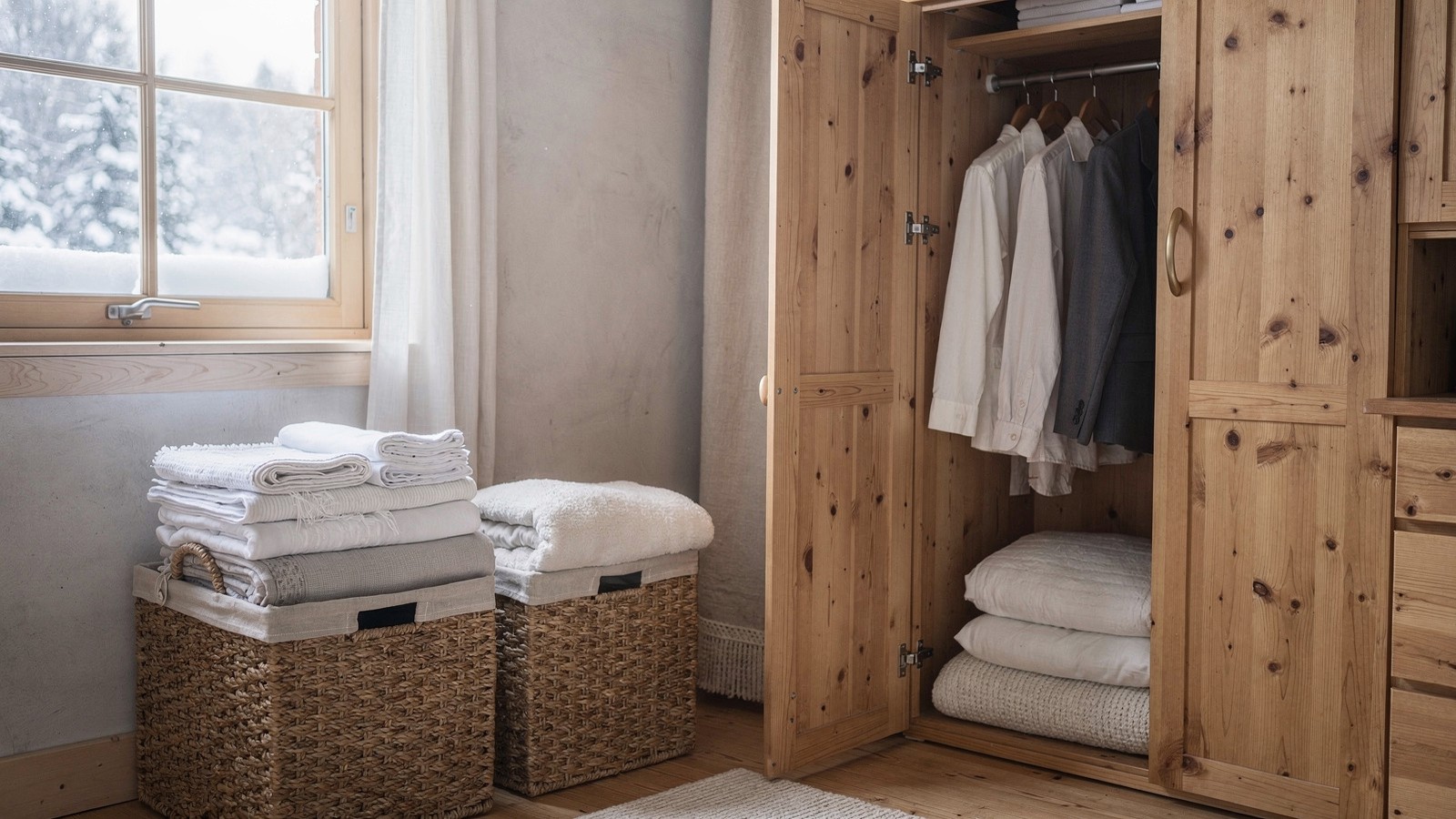
Reset that sticks: 1. Create breathing room (the goal is “air can move,” not “perfectly organized”). 2. Pull textiles off the coldest surfaces (don’t press items against exterior walls). 3. Fix shoe flow: add a drip/dry zone near entry; don’t store wet shoes in closed cabinets. 4. Use moisture absorbers in known problem closets.
Assign + verify: “Closet airflow reset.” Done = 25–30% volume removed/relocated and visible space between clothing.
Moisture Magnet #4: Attics (condensation chamber storage)
Even “fine” attics are risky in winter: cold air, variable insulation, and trapped pockets where damp lingers. The common operator mistake is treating the attic like a long-term archive—especially with cardboard.
Where it goes wrong:
- Cardboard boxes absorbing moisture and inviting pests.
- Clothing and paper stored up there because it’s “out of the way.”
- Packed pathways that block airflow.
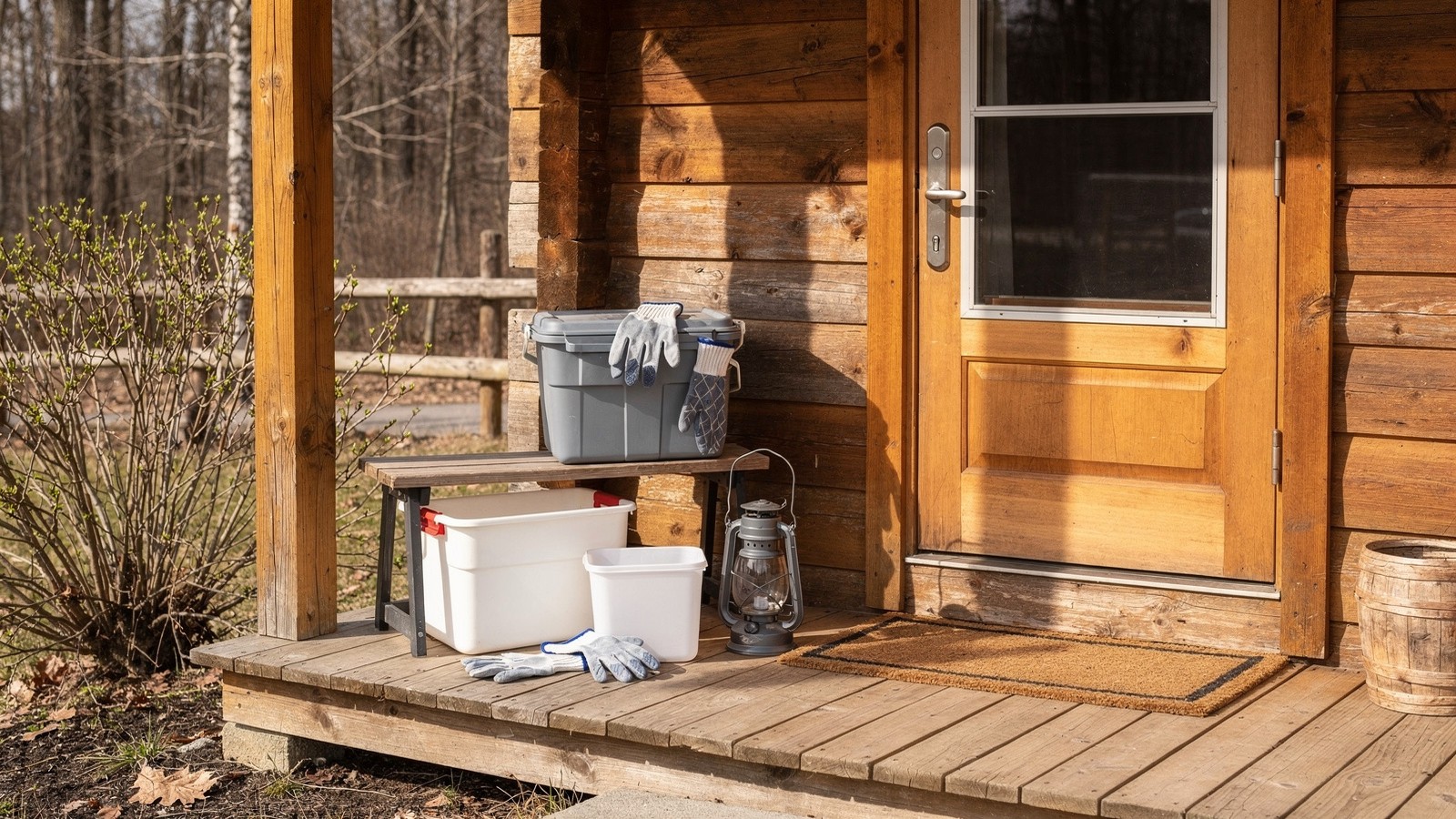
Reset that sticks: 1. Remove high-risk materials first: paper, textiles, sentimental items. 2. Stop using cardboard; switch to weathertight plastic totes. 3. Restore airflow: don’t pack to the rafters; leave gaps. 4. If needed, improve ventilation—but declutter first so you can see what’s actually happening.
Assign + verify: define the outcome up front. Done = sealed totes, labeled, clear walkway, visible gaps for air.
Moisture Magnet #5: Linens, towels, sponges, and cleaning textiles (the musty-smell starter kit)
Fabric holds moisture. If towels are stored slightly damp, if sponges live under the sink, or if old rags pile up, you get the musty smell that turns into a blame game.
Where it goes wrong:
- Linen closets packed tight with no airflow.
- “Utility towels” that never fully dry.
- Sponges and cloths stored in closed, humid cabinets.
Reset that sticks: 1. Purge worn or permanently musty textiles. 2. Store for airflow: use ventilated baskets; avoid airtight storage for everyday linens that aren’t fully dry. 3. Use desiccants/moisture absorbers in known damp cabinets. 4. For seasonal linens: vacuum-seal bags work well *if items are completely dry*.
Standardize the “cleaning textile system” so the state is visible—one bin for clean microfiber, one for dirty, plus a simple laundry cadence.
Keep the baseline: the one humidity number that prevents most winter mold
Decluttering reduces risk, but moisture still has to go somewhere.
- Target 30–40% indoor humidity in winter.
- If you can’t air out regularly, use a dehumidifier in the dampest zone.
- Keep indoor temperature stable enough to reduce condensation swings.
If you’re operating a shared home, treat humidity like smoke detectors: not optional, a prevention metric.
Make it run without you: a simple operator workflow
Most groups don’t need more reminders. They need one visible place where responsibility is clear.
1. Do a 30-minute walkthrough and mark the five categories above. 2. Assign one category per person (or per visit/turnover). 3. Define “done” in one sentence for each task. 4. Add one recurring check (quarterly paper/attic; monthly closet/linen sniff test in damp zones).
When the work is visible, it stays maintained. When it’s invisible, it turns into resentment.
Wrap-up: declutter for airflow, not aesthetics
Winter mold prevention isn’t about minimalism. It’s about removing the specific items that trap moisture and block airflow—paper piles, wet soil, packed closets, attic cardboard, and damp textiles.
Handle those five “moisture magnets,” store what remains in sealed or ventilated containers as appropriate, and keep indoor humidity around 30–40%. You’ll prevent most musty surprises—and you’ll also avoid the shared-home tension that shows up when problems stay hidden until they’re expensive.
If you want one rule to carry forward: the house has to breathe. Keep pathways for air, keep moisture from soaking into storage, and make responsibilities clear enough that the system runs even when the usual organizer isn’t there.