Spring garden advice is usually a list of nice ideas. The real problem is getting it done.
If you manage a shared home (or you’re the person who always ends up doing the work), you know the pattern: someone says “we should sort the garden” in a group chat, a spreadsheet appears, and then April hits and you’re pressure-washing the patio the morning guests arrive.
Most gardens don’t fall behind because nobody cares. They fall behind because the work stays invisible until it’s urgent.
Here’s a shared-home plan: 10 pre-spring jobs that remove friction later. Each one fits into a single session, and each one prevents a predictable “why is this suddenly a crisis?” moment.
1) Outdoor seating reset (make the space usable first)
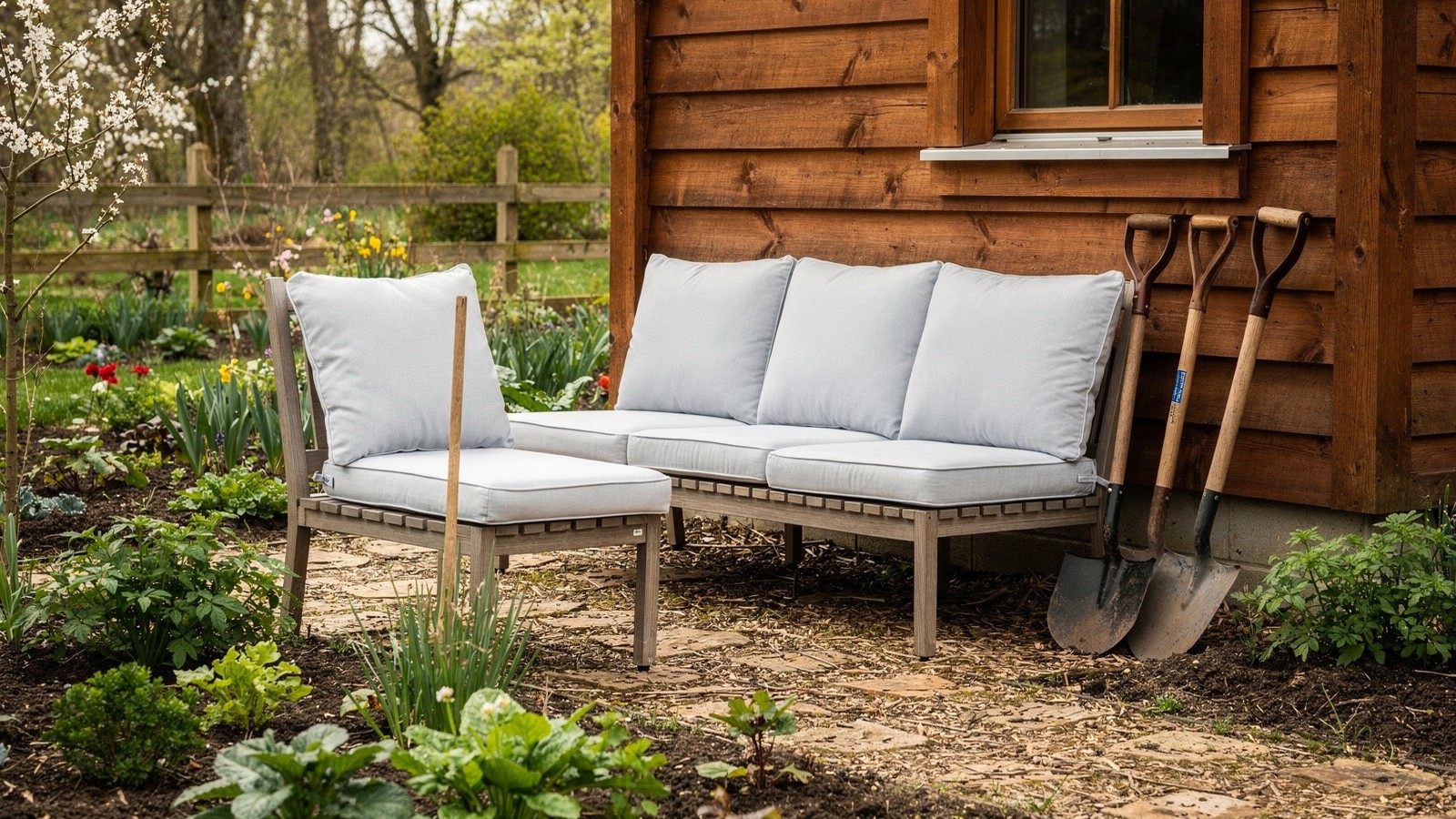
Outdoor furniture is where spring plans either happen or stall. If the chairs wobble, the table is green with algae, or the cushions smell damp, nobody uses the space—and the garden becomes “that thing we should deal with.”
Do this now:
- Inspect and tighten: check bolts and screws on chairs and tables; fix the squeak before it becomes a break.
- Clean properly: warm soapy water for most sets; for wood, finish with a suitable oil or sealant if needed.
- Decide: repair, repaint, or replace: repainting a tired set is often the fastest visual win.
- Add one comfort upgrade: new cushions, a small bistro set, or a dedicated dining set—something that makes the space feel intentional.
Operator note: if multiple people use the garden, agree where cushions live and who brings them in when rain is forecast. The issue usually isn’t the cushion. It’s the missing ownership.
2) Small garden “mirror trick” (fast impact, no extra maintenance)
Small gardens don’t need more stuff. They need better light and better sightlines. A well-placed outdoor mirror can make a tight patio feel wider and brighter.
Do this now:
- Choose a mirror designed for outdoors (or protect it properly).
- Mount it securely on a fence or wall where it reflects greenery, not bins.
- Avoid direct, harsh sun angles that could create glare.
3) Fences, gates, trellises: repair + paint the boundaries
Boundaries are the first thing you see—and the first thing to rot if you ignore them. A fresh coat of paint or stain makes the whole garden look cared for, even if the beds are still waking up.
Do this now:
- Walk the perimeter and mark repairs: loose panels, leaning posts, rusty hinges.
- Clean and prep: brush off dirt and algae; sand rough patches.
- Paint or stain during a dry spell so it cures properly.
Why this comes early: once spring growth kicks in, access gets harder and you’ll keep postponing it.
4) Tool service (so spring jobs don’t stall)
Spring is when tools get blamed for slow progress. Most of the time, they’re just neglected.
Do this now:
- Hand tools: clean off soil, dry fully, oil metal parts lightly, sharpen secateurs and shears.
- Power tools: check blades/lines, clean vents, inspect cables, charge batteries, replace worn parts.
- Safety basics: gloves, eye protection, and a plan for extension leads outdoors.
Next friction point: if tools are hard to find or carry, even serviced tools won’t get used.
5) Shed reset (remove the “multiple trips” tax)
A messy shed doesn’t just waste time. It creates avoidance. When every job starts with moving five things to reach one thing, you stop doing jobs.
Do this now (one session):
- Pull out everything and sort into three piles: keep / donate / bin.
- Make space for large items first (mower, strimmer, bags of compost).
- Add racking or shelving for small tools and consumables.
- Label one “grab zone” shelf: gloves, twine, secateurs, plant ties, bulbs, seed packets.
Operator note: shared spaces need visible rules. If you want the shed to stay organised, decide where the “return point” is for the most-used items.
6) Compost + water capture (systems that reduce future work)
This is the unglamorous system work that pays you back all season.
Composting:
- Use a compost bin for kitchen scraps (veg peelings), old leaves, and non-diseased plant matter.
- Keep a simple balance: “greens” (fresh scraps) + “browns” (dry leaves/cardboard).
Water butts:
- If you have a downpipe, a water butt reduces hose use and makes watering feel “free,” which means it happens more consistently.
7) Seeds + indoor starts (avoid the April scramble)
If you wait until spring is fully here, you’re competing with stock shortages and your own calendar.
Do this now:
- Order seeds and basics (seed trays, compost, labels).
- Start seeds indoors where appropriate.
Harden off (the part people skip):
- Before transplanting, put seedlings outside for a few hours a day.
- Increase outdoor time gradually over a week or two.
Shared-home note: label trays clearly. “Whose tomatoes are these?” is not a fun debate in April.
8) Beds: tidy + prune for airflow (prevention, not perfection)
Flowerbeds don’t need perfection. They need airflow, light, and less decaying material.
Do this now:
- Remove dead flowers and dying plant matter.
- Cut back thick, congested branches where appropriate.
- Clear around crowns so new shoots aren’t competing with rot.
Why it matters: dead and decaying material is where pests and disease settle in.
9) Divide and move perennials at the right time
This is one of the few jobs where timing matters.
Best time in many climates: early spring or autumn, depending on the plant and local conditions.
- Summer has too much active growth—moving plants then stresses them.
- Winter frost can damage roots if they’re disturbed.
Do this now:
- Identify overcrowded clumps.
- Lift and divide perennials to encourage healthier growth and multiply plants without buying more.
- Replant promptly and water in.
10) Hardscapes + lawn reset (make the garden feel “ready”)
This is the work that changes how the whole space feels.
Patios and decking: clean before entertaining season
- Pressure wash to remove grime, algae, and winter buildup.
- Work methodically; don’t blast too close to joints or soft wood.
Lawn: mow, weed, then scarify
Scarifying is the simple lawn fix most people skip.
- What it does: removes moss and thatch (dead organic matter).
- Why it matters: thatch blocks sunlight and water from reaching roots and encourages weeds and moss.
Soil: turn, mulch, and aerate
- Remove weeds first.
- Till/turn soil to prep for planting.
- Add mulch to suppress regrowth and retain moisture.
- Aerate compacted areas so roots can breathe and water can penetrate.
Operator note: don’t try to do all of this in one weekend. Split it into sessions and you’ll finish.
Make it stick: a simple schedule that doesn’t become a project
If you want this to stick, treat it like operations:
- Pick two jobs per weekend for five weekends.
- Assign one owner per job.
- Define “done” in one line (e.g., “shed: racking installed + floor clear + tools returned to zones”).
The real damage is often tension between co-owners, not just missed tasks. A missed handoff becomes an argument when the work is invisible.
Make it visible, make it owned, and spring becomes enjoyable instead of reactive.
Close: do the boring work now so spring feels easy later
A lush, low-stress spring garden isn’t built in April. It’s built in the quiet weeks before spring arrives—when you can paint the fence without dodging new growth, sharpen tools without needing them tomorrow, and organise the shed without stepping over half-finished jobs.
Start with the friction points: furniture, tools, storage, and the lawn. Do a little each week. When the first warm weekend shows up, you won’t be scrambling—you’ll be using the garden.