Most groups don’t struggle because they lack activity ideas. They struggle because nobody owns the plan.
At a shared cabin, “Let’s do something outside with the kids” can fall into a familiar loop: someone suggests it in the group chat, someone else says “sounds great,” and then—two hours later—half the kids are bored, the adults are irritated, and the kitchen table is covered in random supplies nobody agreed to buy.
Nature crafts are one of the few activity categories that reliably work in shared-home settings: low-cost, flexible across ages, and they get everyone outside without a screen, a reservation, or perfect weather.
The catch is they only stay “easy” if you run them like an operator: simple kit, clear boundaries, and a cleanup plan that doesn’t rely on goodwill.
In this post: a 5-minute setup that prevents the usual friction, plus 10 nature crafts that work at shared cabins without creating cleanup drama.
The 5-minute setup that prevents cleanup drama
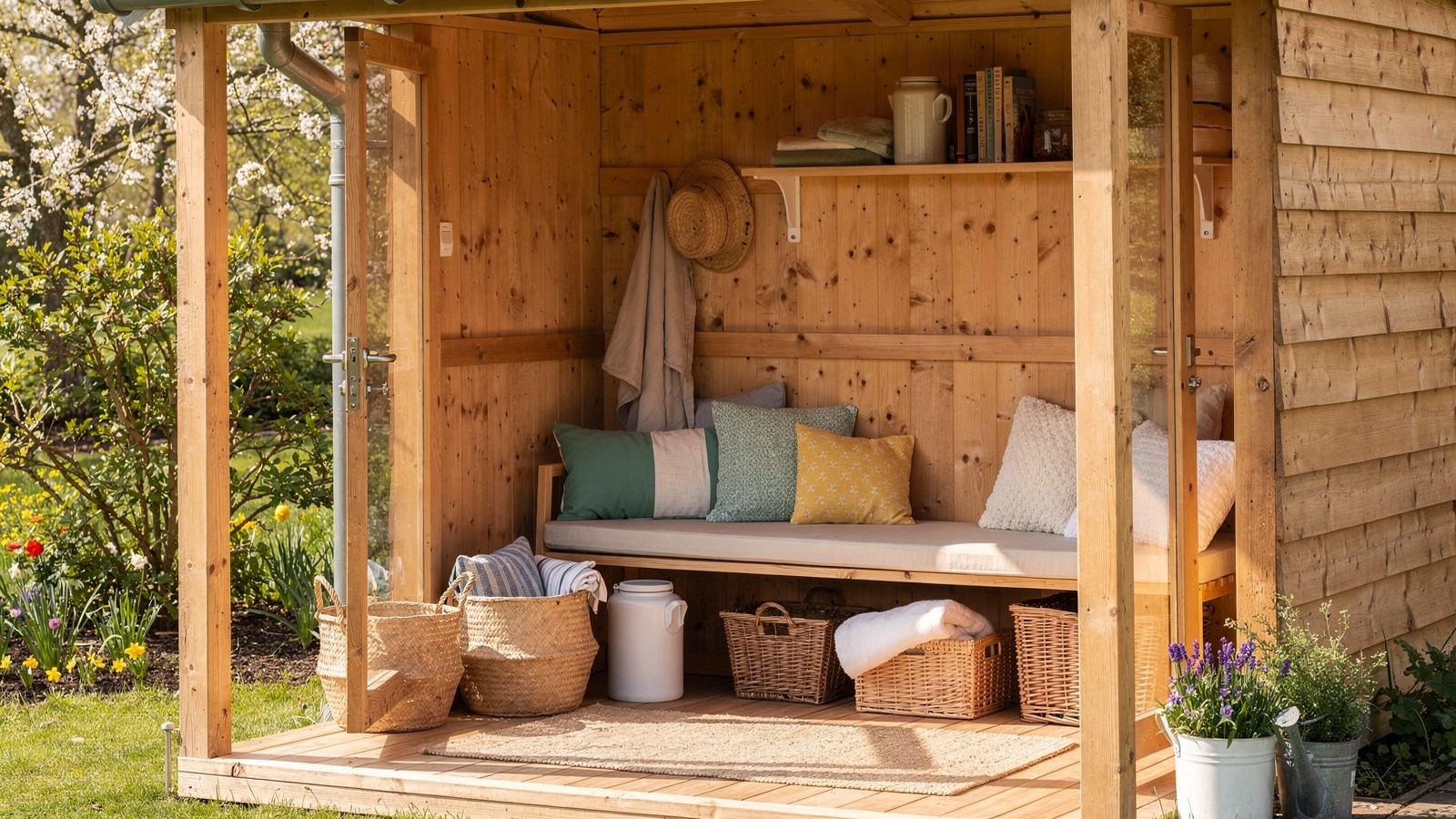
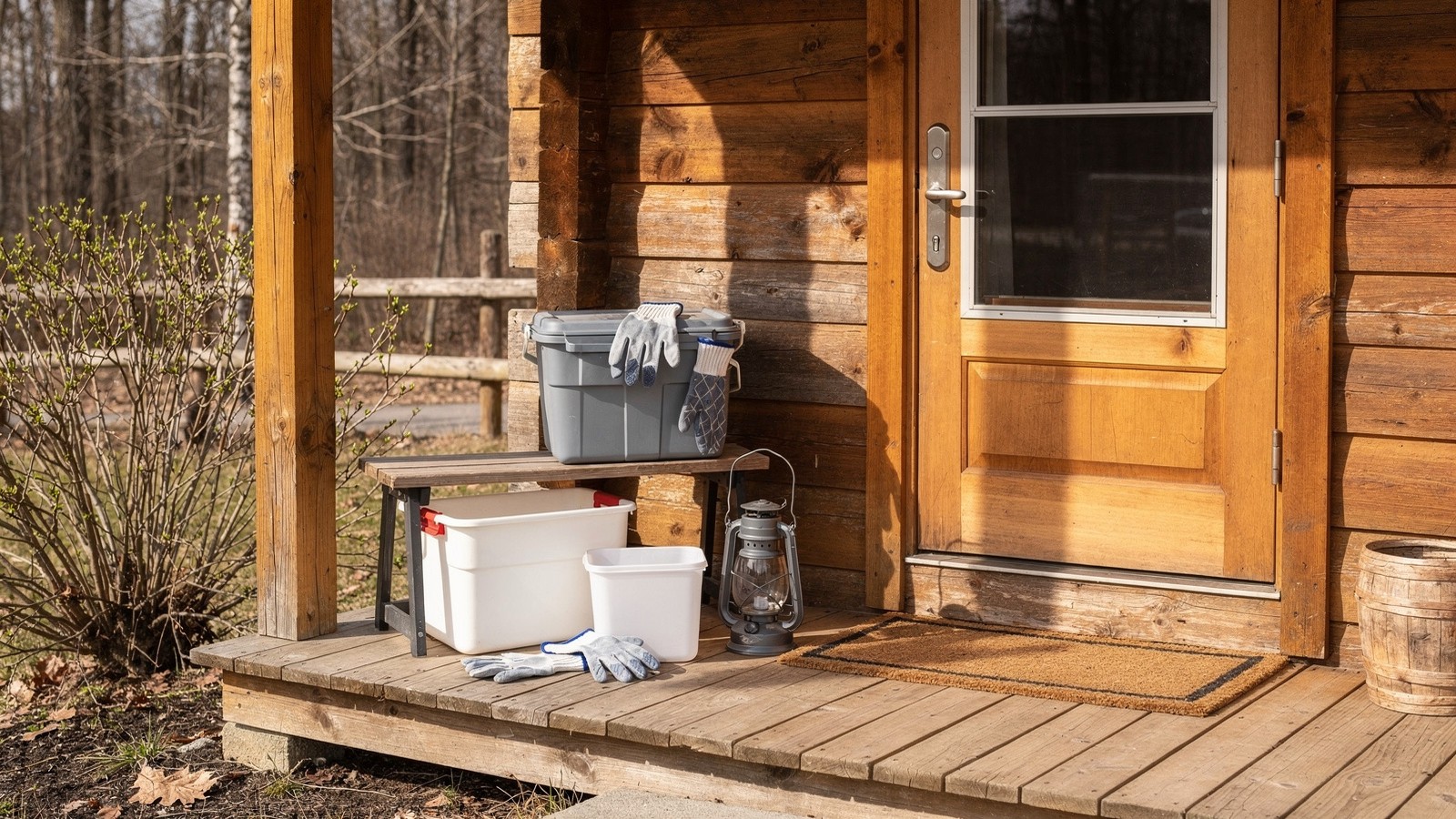
1) Choose one craft zone (and keep it there). Pick one place where supplies live and where projects happen (porch table, picnic table, mudroom bench). The issue usually isn’t the craft. It’s the wandering.
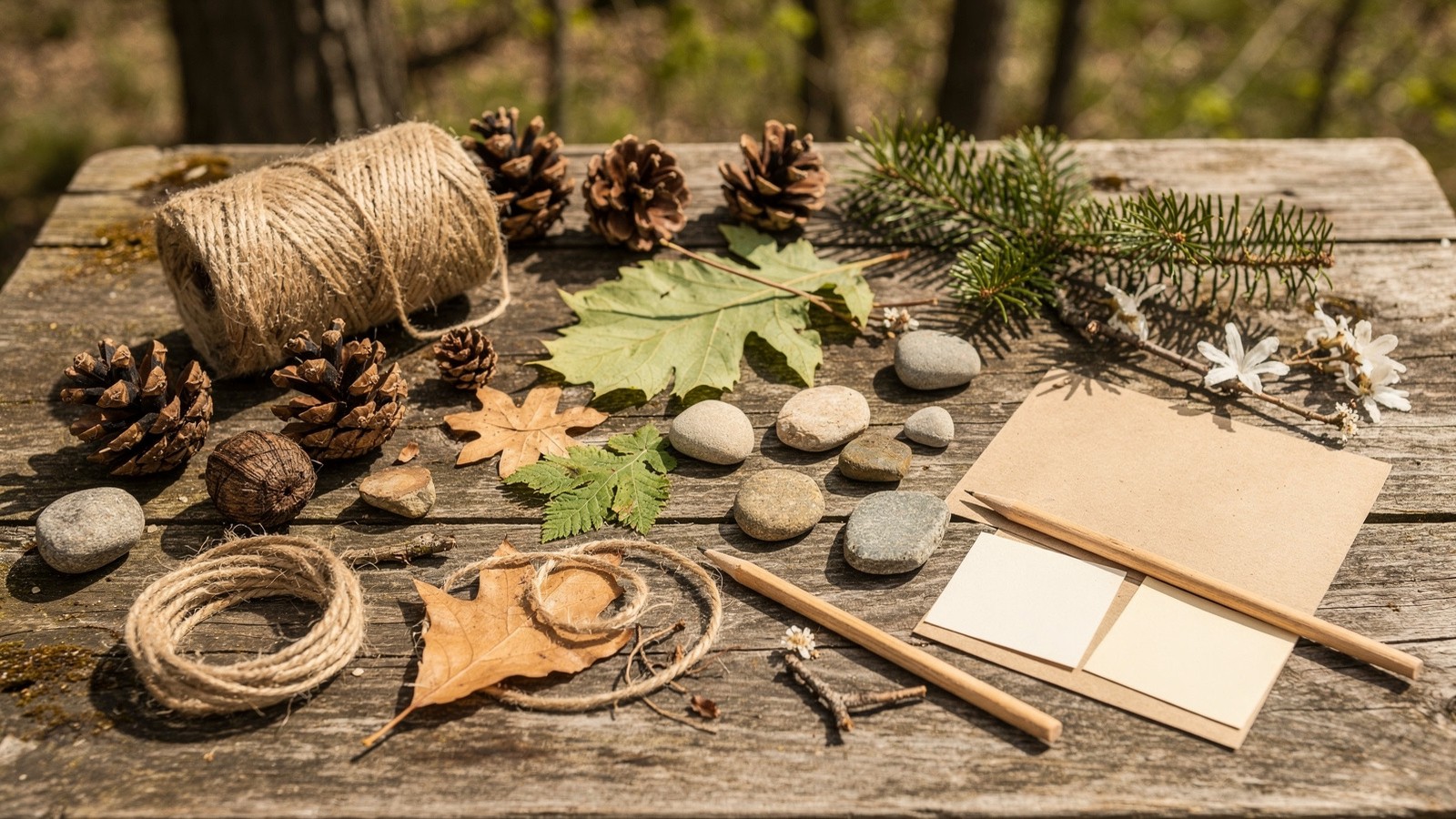
2) Set the “found materials” rule. Agree on what’s okay to collect:
- Yes: fallen leaves, sticks, pinecones, pebbles, shells
- No: live plants pulled up, anything from protected dunes, nests, or animal habitats
- “Ask first”: flowers (some properties care), moss (tears up easily)
3) Use a tiny, repeatable cabin kit. You don’t need a craft store. This covers most of what’s below:
- Pencils + a sharpener
- Paper (printer paper is fine)
- Crayons (for rubbings)
- Masking tape
- String or yarn
- Scissors
- A small hammer (older kids, supervised)
- Air-dry clay (optional, but worth it)
- Cheap watercolor set + brush
- Old dish towel or rag
4) Assign ownership out loud (before anyone starts). One adult owns supplies. One adult owns cleanup. Rotate tomorrow. A missed handoff becomes an argument when the work is invisible.
10 nature crafts that work at shared cabins
1) Shadow tracing (fastest “we need something now” option)
Best for: ages 3–12
What you need: paper + pencil
How to run it:
- Find strong light: sunny deck, driveway, or a bright window.
- Place leaves, branches, or flowers so they cast a clear shadow on paper.
- Kids trace the outline, then turn the shapes into characters, animals, or patterns.
Operator notes:
- Tape the paper down if there’s wind.
- If the sun moves fast, call it a “time-lapse” and let them trace the shadow twice to see how it shifts.
2) Texture rubbings (low-mess, high-focus)
Best for: ages 2–10
What you need: paper + crayons (peel wrappers for better rubbings)
How to run it:
- Press paper against bark, roots, rocks, deck boards, or big leaves.
- Rub crayon sideways across the paper to reveal texture.
Operator notes:
- Great “calm-down” activity after swimming.
- Set a boundary: no rubbing on painted cabin walls or furniture. Sounds obvious—until it isn’t.
3) Flower threading (fine-motor without feeling like school)
Best for: ages 3–8 (also works for older kids who like making gifts)
What you need: string/yarn + something to poke holes (a twig, toothpick, or child-safe needle)
How to run it:
- Do a quick flower/leaf scavenger hunt.
- Poke a small hole through thicker stems/leaves.
- Thread onto string to make a garland or bracelet.
Operator notes:
- Keep it property-friendly: use fallen blooms or pick sparingly.
- Decide where finished garlands go (porch rail, not doorknobs that get yanked).
4) Bouquet building (the easiest “everyone contributes” win)
Best for: all ages
What you need: a jar or cup of water
How to run it:
- Give kids a simple mission: “Find 10 different textures/colors.”
- Build a bouquet together and put it on the table.
Operator notes:
- This is the craft for mixed groups where some kids won’t sit still.
- If you’re managing co-owner tension, it’s also a quiet reset: everyone can contribute without competing.
5) Air-dry clay leaf/flower impressions (souvenir-level results)
Best for: ages 4–12
What you need: air-dry clay + leaves/flowers
How to run it:
- Roll clay into a flat disc.
- Press leaves/flowers into the surface.
- Peel away carefully and let dry.
- Optional: poke a hole before drying to make ornaments.
Operator notes:
- Put down a placemat or cardboard. Clay crumbs travel.
- Label pieces early. Unclaimed crafts are how you end up storing “mystery art” for months.
6) Homemade stamping (the rainy-day backup)
Best for: ages 3–12
What you need: potato (or lemon, apple, celery), paint, paper
How to run it:
- Cut a potato in half and carve simple shapes (adult task).
- Dip and stamp patterns.
- Try lemons for citrus circles or celery for “rose” prints.
Operator notes:
- Cabin rule: paint stays in the craft zone. No exceptions.
- Cleaner version: use washable markers on the stamp and press onto paper.
7) Flower hammering (eco-printing) on fabric (quiet and satisfying)
Best for: older kids + adults
What you need: fabric (cotton works well), flowers/leaves, hammer, cardboard, tape
How to run it:
- Place fabric on cardboard.
- Arrange flowers/leaves.
- Cover with another layer of fabric or paper towel.
- Gently hammer to transfer natural pigment.
Operator notes:
- This is a one-on-one activity. Don’t run it with six kids and one hammer.
- Set expectations: results vary. Say that up front.
8) Nature life-cycle diagrams (structured, but not a lecture)
Best for: ages 5–12
What you need: paper + pencil + found objects
How to run it:
- Pick a creature: frog, dragonfly, butterfly.
- Draw a simple cycle (four circles is enough).
- Use found objects to represent stages (pebbles for eggs, a twig for an adult dragonfly body, etc.).
Operator notes:
- Ideal when you want something structured after a hike or pond walk.
- Take a photo before it gets bumped. Kids care more about being seen than being stored.
9) Stick boats and rafts (the STEAM activity that doesn’t feel like one)
Best for: ages 6–14
What you need: sticks, string, leaves/bark, optional tape
How to run it:
- Build a small raft or boat.
- Test in shallow water (shoreline, stream edge) and iterate.
- Add a “cargo test” with pebbles to explore buoyancy.
Operator notes:
- Safety first: define the water boundary and assign a dedicated water-watcher.
- It can turn competitive fast. Keep the win condition simple: “floats for 30 seconds.”
10) Bug hotels (the longer project that pays off)
Best for: ages 4–12 with adult help
What you need: a container or wooden box, sticks, pinecones, bark, dry leaves
How to run it:
- Gather natural materials.
- Pack them into sections (twigs, pinecones, rolled leaves).
- Place the hotel in a quiet spot near plants.
Operator notes:
- Don’t overpromise. You’re creating habitat potential, not guaranteed tenants.
- Put it somewhere it won’t become a “toy” that gets moved daily.
Bonus (if you’re at the beach): Rock and shell painting with a hard limit
Best for: ages 3–adult
What you need: watercolors + brush + rocks/shells
How to run it:
- Paint simple patterns at the beach.
- Let dry in the sun.
- Bring home as a display piece or future craft material.
Operator notes:
- Set a limit: “one rock each.” Otherwise you’ll be hauling a bucket of wet stones back to the cabin.
The operating rules that keep crafts from turning into cabin conflict
In shared homes, the real cost isn’t supplies—it’s friction. A few operating rules prevent the classic blowups:
- One visible place for supplies. If scissors live in three drawers, they live in none.
- A defined end time. “We craft for 45 minutes, then cleanup.” Predictable transitions help.
- Cleanup is part of the activity, not a separate favor. Put it on the plan.
- Photograph and release. Not every craft needs to be stored. Take a picture, display it for a day, then compost/recycle what you can.
Wrap-up: Screen-free doesn’t need to be complicated—just owned
Nature crafts work because the outdoors provides the materials, the inspiration, and built-in variety. But at a shared cabin, the difference between “wholesome afternoon” and “why is there paint on the deck” is almost always ownership.
Pick one activity from this list, set a clear craft zone, run it with a small kit, and assign cleanup before you start. Do that, and you’ll get what everyone actually wants from a cabin weekend: kids busy, adults calmer, and a house that doesn’t take a full day to recover.